Paratrike takeoff. Thrust vector relative to the ground.
This angle is crucial for achieving an easy paratrike takeoff. The idea is this: when the paraglider is on the ground during takeoff and the engine is idling, the airflow created by the propeller should pass over the paraglider and not blow directly at the wing. If the airflow is directed towards the wing, takeoff will be very difficult because the wing will begin to flap instead of inflating. The leading edge typically tends to fold inwards.
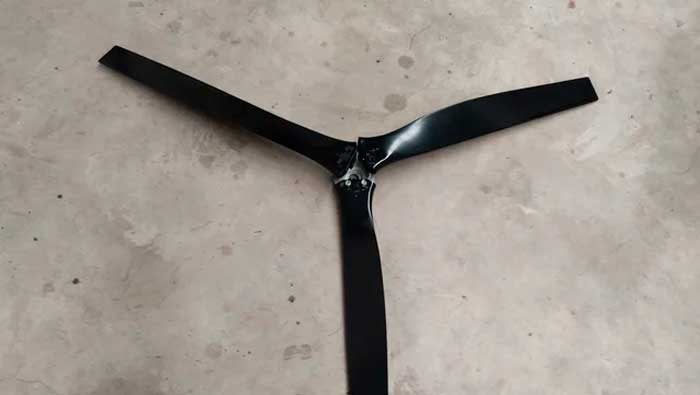
The angle typically varies between 5 and 9 degrees depending on the type and diameter of the propeller. For small propellers located 50 centimeters from the ground, 5 degrees is usually sufficient, while for 1.60-meter propellers located 25 cm from the ground, sometimes even 7 degrees is not enough.
With angles greater than 12-15 degrees, the sail rises quite happily in the last third, as the jet exerts the thrust in the power zone and causes a step where the sail accelerates, before reaching the lift zone.