Paramotor report 27/12/2020
CONDITIONS OF THE DAY
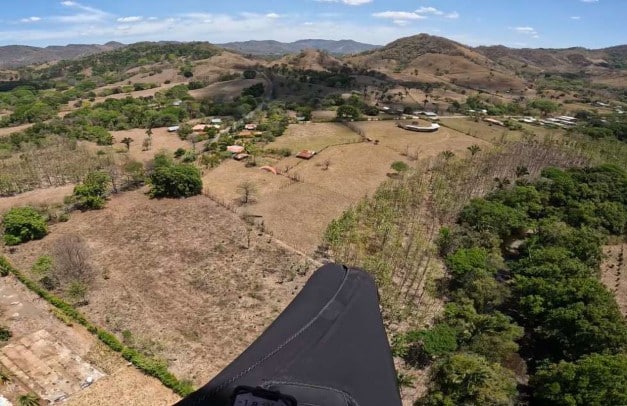
December 27, 2020, Esterillos East Beach, approximately 11:30 am, conditions typical of laminar sea breeze in the middle of the day, SW component, rising tide, high tide was at 01:38 pm, wind speed of about 15 km/h. Clear sky and visibility of more than 10 km.
IN-FLIGHT MANEUVER
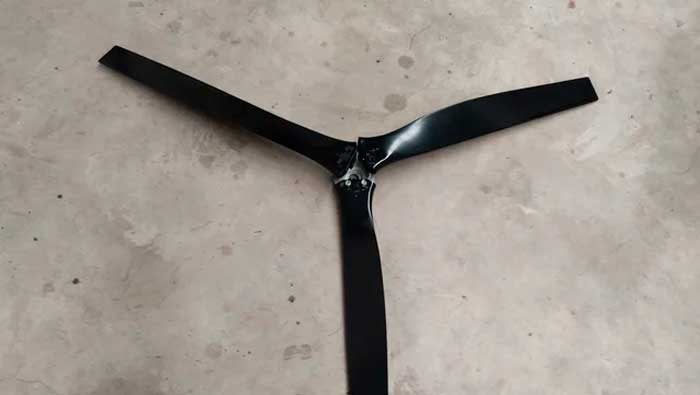
The pilot transitioned from level flight at approximately 60 meters above the ground, flying south from the Esterillos Centro estuary towards Bejuco. Near the El Torito Restaurant, he began his approach, intending to land on the beach by executing a left-hand spiral. The altitude was approximately 40 meters above the ground. Suddenly, the paraglider accelerated spontaneously, and the wing opposite the turn then lifted, suggesting a negative roll. At that point, the leading edge was pointing directly at the ground. After barely a turn, the pilot impacted the sand. The motor continued spinning, and the wing struck the ground. The paraglider sustained significant damage to the center boxes due to the impact force.
FLIGHT MECHANICS
In paramotors, the chassis arms are what connect the seat to the paramotor structure and also house the carabiners where the paraglider is anchored.
This adjustment is critical because the arms, with their different anchor positions, act like a Roman balance, counterbalancing the pilot with the paramotor's weight. These are adjusted until an approximate 20-degree angle is found between the propeller plane and the ground. By moving this anchor forward or backward, the pilot can vary this angle according to their weight.
Two shackles on each arm secure the chair to the chassis:
– One is located at the end of the arm, whose purpose is to support the harness thigh supports and balance the pilot's position
– Another one supports the pilot's harness and the paraglider's main anchor point. The harness has a double-stitched safety strap that attaches to the wing's carabiner and also to the shackle on the arm that supports the paramotor's weight. .
CONSEQUENCES
The shackle supporting the left carabiner accidentally opened in flight, causing an imbalance of forces. The carabiner anchoring the wing did not release, but without the shackle's action, the wing could move freely relative to the frame arm (about 15-20 centimeters). In this configuration, the pilot spontaneously shifted their weight to the opposite side, where the shackle was not acting. The flight configuration at that moment—the spiral and the proximity to the ground—triggered the incident.
NEWLY DESIGNED SHACKLE
The handcuffs have a safety pin and must be tightened securely. In this case, the manufacturer incorporated grooves into the eyelet to create a self-locking effect with the pin's wing nut after tightening. This handcuff model is recent and new to its category.
After consulting directly with the manufacturer, they indicated that the pin should be tightened 3/4 of a turn, meaning that three "clicks" should be heard for the pin to lock into position. They also recommend placing a locking ring between the eyelet, the pin, and the U-shaped shackle. None of these instructions or directions are included in any of the manufacturer's manuals, service sheets, or assembly guides. The locking rings were not installed on the paramotor.
CONCLUSION
A mechanical failure caused the accident. The left shackle of the main anchor point opened because the pin loosened, allowing the paraglider's riser to detach and causing a spontaneous weight transfer to the affected side. The lack of altitude and the flight configuration in the middle of a spiral contributed to the incident.
RECOMMENDATIONS
Have your equipment inspected by a specialist at least once a year, always perform a pre-flight inspection, consult the manufacturer with any questions regarding the design or assembly, and replace any equipment at the first sign of wear or fatigue. Attach locking devices to anything that could come loose from your harnesses or paragliders. USE RINGS ON ALL SHACKS.

Harness attachment to the paramotor arms
(it is not the model of the event)

Grooved shackle

Shackle Failure (open)

Mandatory safety ring