“Pintas y repintas”, the Costa Rican tradition for predicting the weather
It's not unusual to hear the older members of the family talking about "pints and repints," because it's that time of year when many of them "predict" what the weather will be like in our country throughout the new year. Not even NASA dares to go that far.
But what are they? Where does the tradition come from? What other practices are they related to? Pay attention, take notes, and make your own weather prediction.
The writer, chronicler of local customs and historian, Dionisio Cabal, explained to crhoy.com that this tradition is very old, and is directly related to agricultural practices.
“It’s a kind of anticipation that can be done by reading the behavior of the sky and the weather in general during the first month of the year,” Cabal stated.
The origin of the practice is related to the studies of climate knowledge carried out by the oldest cultures in history, which were adopted by the Spanish culture and then adapted to the subtropics, the region to which our country belongs.
“The pints were born out of a need to know what the climate future will be like, and what its impact will be on vegetable crops, and even on animals,” the historian commented.
“I remember that even my parents wouldn’t let me or my siblings go into the rivers during the painting season, because supposedly we would get white “marks” on our skin,” commented Lidia Chávez, a resident of Río Frío de Sarapiquí who is a firm believer in this practice.
“I remember that they also talked about the dog days, what is called “the land’s rest.” It is a period from July 2nd to September 2nd in which the land hardly produces anything, and it can generate many losses,” Chávez commented.
How to predict the future of the climate?
“The "pints" are developed during the first 12 days of January. The first of January indicates the weather for the entire month of January, the second predicts the weather for February, the third predicts the weather for March, and so on until the 12th, which is associated with December.
But the analysis doesn't end there. "The repainting" begins on January 13th. From this date onwards, each day represents two different months.
For example: the weather conditions on the morning of January 13th predict the weather for the first month of the year, while the afternoon is associated with February. January 14th would "paint" the weather for March morning and April afternoon, and so on until the 18th of January.
And as if that weren't enough, from January 19 to 21, the 12 hours of daylight are divided into four, and every three hours would represent a different month.
“After the entire analysis period, people take stock and predict the weather conditions for the 12 months of the year,” Cabal concluded.
The historian commented that the insurance practice worked for the people who believed or believe in it; otherwise, it would never have transcended through history.
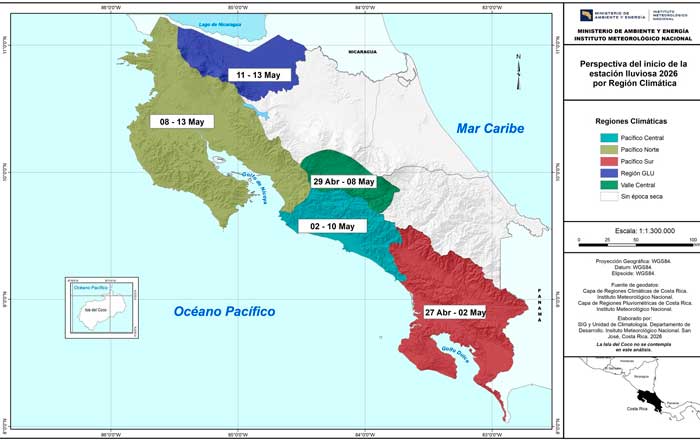
The National Meteorological Institute (IMN) has commented that this is just a traditional custom of Costa Ricans and that, moreover, it is not supported by any scientific study.